



Artificial Intelligence Enables Analysis of Embryonic Development with Unprecedented Spatiotemporal Resolution
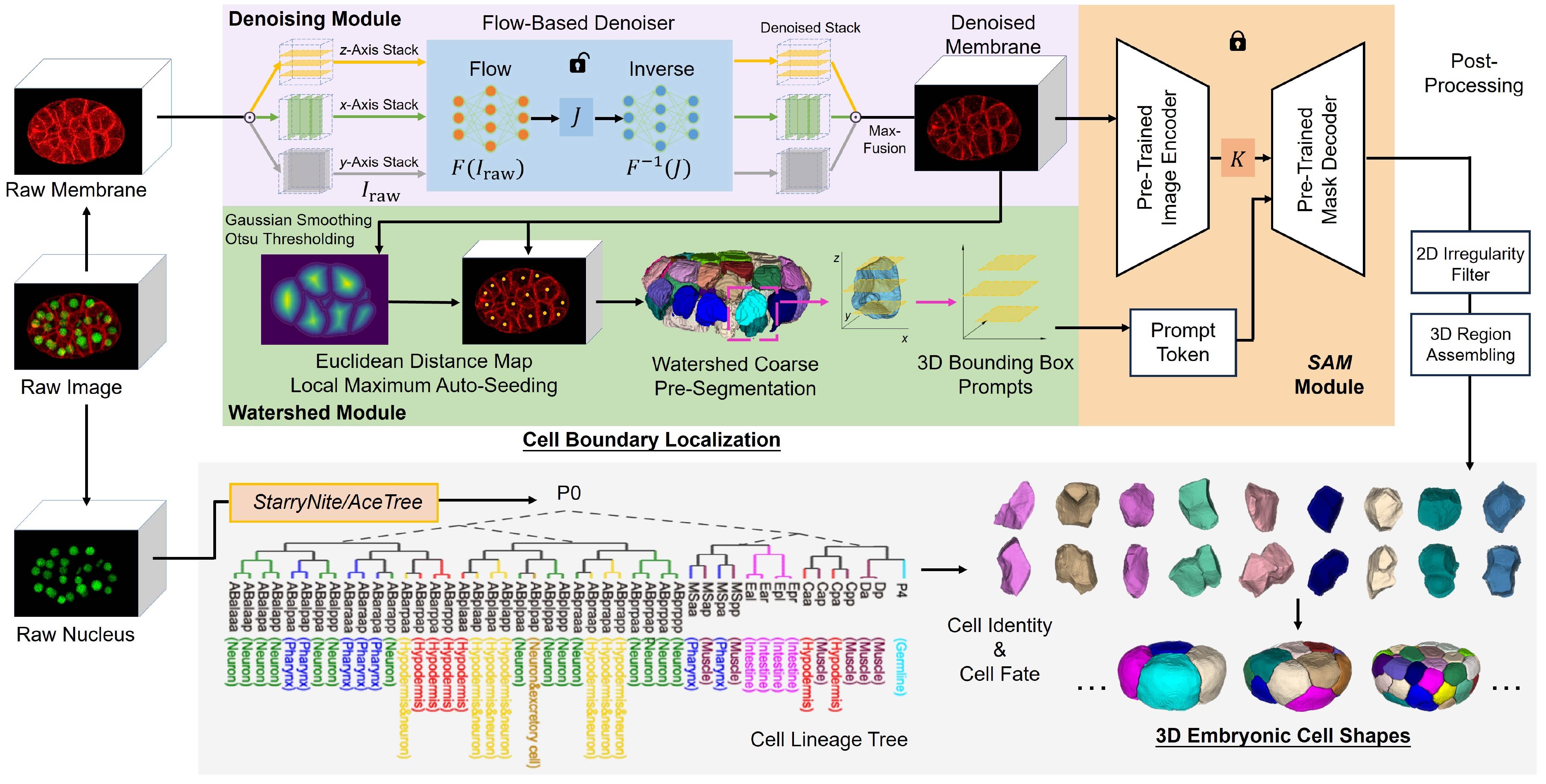
Workflow of AI tool, EmbSAM, for image denoising, cell segmentation, lineage tracing, and quantitative analysis for time-lapse 3D images acquired under conditions of high cell density, high image noise, and high temporal resolution.
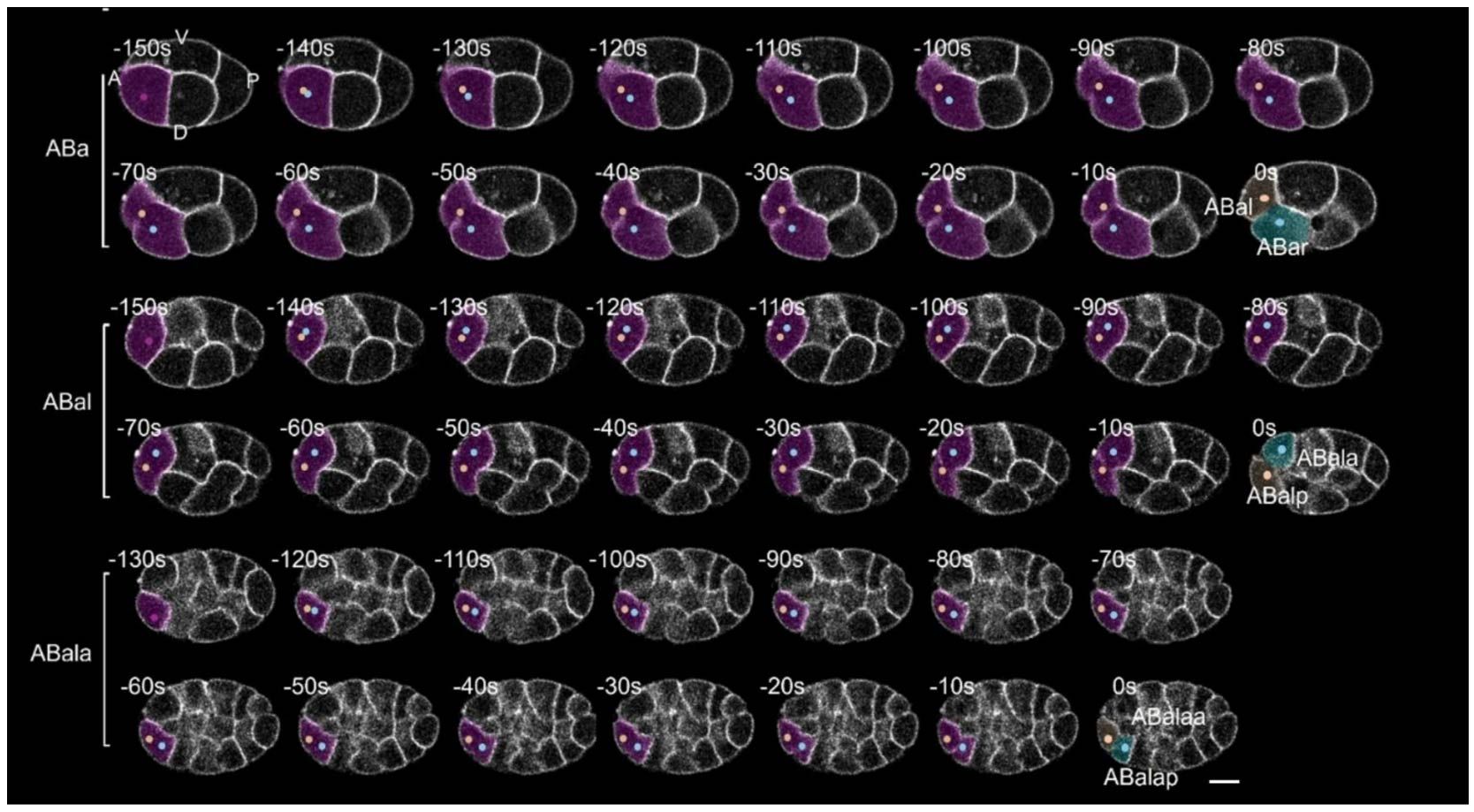
Quantitative analysis on fast cell behaviours, represented by cell shape dynamics and coordinated movements of cell nucleus and membrane during cell division.
Life is fundamentally composed of cells, and their behaviours are central to all biological processes. For instance, during embryonic development, cells must divide, move, and change shape in a precisely regulated manner to form functional tissues and organs. When these processes go wrong, it can lead to diseases like cancer, where cells grow uncontrollably and behave irregularly. However, monitoring these rapid changes in cells under a microscope poses significant challenges. Cells are often closely packed, making them hard to distinguish, and existing tools can struggle to capture their dynamics accurately. Moreover, prolonged light exposure can damage cells and affect image quality.
To tackle these challenges, Professor ZHAO Zhongying from the Department of Biology and a team of biologists, physicists, and computer scientists from numerous institutions, including Hong Kong Baptist University, Harvard University, Peking University, City University of Hong Kong, and Beijing Normal University, developed an innovative AI-based tool called EmbSAM. This tool is designed to analyse time-lapse 3D images of densely packed cells, providing features for noise reduction, cell boundary detection, lineage tracking, and quantitative analysis.
In tests involving worm embryos transitioning from a single cell to dozens, EmbSAM outperformed existing methods, enabling detailed and accurate tracking of rapid cell behaviour changes. With a temporal resolution of just 10 seconds, it captures critical biological events like cell division and membrane dynamics. The insights gained could significantly enhance our understanding of diseases, such as cancer, by revealing how cell behaviour relates to uncontrolled growth and movement. Ultimately, this work aims to advance biomedical research, providing a better understanding of developmental processes and disease mechanisms.
The research findings have been published in Communications Biology under the title “EmbSAM: cell boundary localization and Segment Anything Model for fast images of developing embryos”.
https://www.sci.hkbu.edu.hk/research-spotlight/894?lang=en